
"shallow boiling"
1000 article(s) found

Siphon pot extraction coffee boil time shallow roast coffee beans how to deep bake coffee beans coffee utensils
The practical parameters of extraction time: 40 seconds, 50 seconds, 60 seconds, 40 seconds, 50 seconds, 60 seconds, 50 seconds, 60 seconds,

The relationship between coffee and 3T
Following caf é (Wechat official account vdailycom) found that Beautiful Cafe opened a small shop of its own to control 3T: water temperature, time and Turbulence. 3T refers to water temperature (Temperature), Time (time) and Turbulence (water flow). The water temperature, soaking time and the strength of stirring water flow, like the thickness, will affect the extraction rate, and then affect the concentration of coffee.
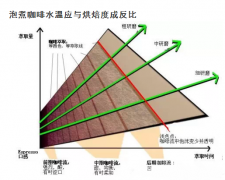
Key factors of SCAA Coffee extraction Water temperature, time and Water flow
The three factors affecting brewing coffee are water temperature (Temperature), time (Time) and water flow (Turbulence). The water temperature, the soaking time and the strength of the stirring flow, like the thickness, will affect the extraction rate, and then affect the thickness of the coffee. Interestingly, 3T needs to be inversely proportional to the degree of roasting in order to make delicious coffee. The water temperature of brewing coffee should be related to the degree of roasting.

Water temperature parameters of plug kettle
Practical parameters of water temperature: boiling / boiling in hot water at high temperature: 88 ℃ ~ 94 ℃, suitable for shallow baking to medium baking pot straight insert: soaking water temperature range, 88 ℃ ~ 94 ℃ upper pot first oblique plug and then straight plug: bubble boiling water temperature range, 90 ℃ ~ 95 ℃ if deep baked beans are boiled at high temperature, add some cold water in the upper pot so as not to be too bitter * the final extraction water temperature of high temperature boiling should not exceed 94 ℃, which can be suppressed.

Dynamic drip filter pot hand siphon kettle (stirring force) low temperature extraction filter kettle
The soaking time should be inversely proportional to the baking degree under a fixed amount of water, the longer (shorter) the steaming time, the higher (lower) the extraction rate and the higher (lower) the concentration. The baking degree should be taken as the main consideration for the length of soaking time. Shallow baked beans are not easy to extract, so the brewing time should be a little longer than baking. On the contrary, re-baked beans are easier to extract, so the brewing time is slightly shorter than that of shallow baking. In other words, the baking degree should be

SCAA Coffee extract Water temperature time Water flow Fine Coffee beans roasted Coffee beans Italian blending
The soaking time should be inversely proportional to the baking degree under a fixed amount of water, the longer (shorter) the steaming time, the higher (lower) the extraction rate and the higher (lower) the concentration. The baking degree should be taken as the main consideration for the length of soaking time. Shallow baked beans are not easy to extract, so the brewing time should be a little longer than baking. On the contrary, re-baked beans are easier to extract, so the brewing time is slightly shorter than that of shallow baking. In other words, the baking degree should be

Coffee powder rough grinding scale-Italian coffee grinding thickness scale
Coffee powder rough grinding scale-Italian coffee grinding thickness scale ① cloth as the inside, coffee powder 10-12g per person into the filter cloth, and then flatten the coffee powder. ② shallow roasted coffee boiled water temperature is about 95 degrees, while deep roasting is lower, the initial thin line injection, while controlling the amount of boiling water while making a round injection. The coffee powder should be steamed for 20 seconds after steaming, which should be suspended during this period. The first
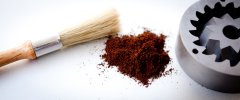
Coffee brewing technology siphon pot making coffee understanding the calibration parameters of siphon pot
Recognize the practical parameters of siphon pot scale parameters: 4 scale (suitable for light taste and deep baked beans) 3.5 scale (suitable for general taste or light baking, medium and deep baking, deep baking) 3 scales (slightly heavier taste, suitable for shallow baking, medium baking, but not suitable for medium and deep baking) 2.5 scale (heavy taste, suitable for medium baking, but not suitable for shallow baking and deep baking) the deeper the baking degree, the less suitable for fine grinding.

Coffee drinking methods
Ethiopia used to chop coffee fruit into oil balls and eat them as food. The practice spread to Arabia, where coffee seeds were chopped, boiled and spiced to create Cafe ala Sultana, the earliest coffee drink in history. Turkish coffee is brewed with an Ibrik, a traditional method of brewing that enables deeply roasted coffee

The evolution of coffee drinking patterns in coffee culture
Ethiopia used to chop up coffee fruits and use oil to crush them into balls and eat them as food. This practice spread to Arabia, where coffee seeds were chopped and boiled and spiced to become Cafe ala Sultana, the earliest coffee drink in history. Turkish coffee is brewed with an utensil similar to a spoon (Ibrik), a traditional method that allows deep-roasted coffee.

Discussion on the Culture and Customs of Coffee
Ethiopia used to chop up coffee fruits and use oil to crush them into balls and eat them as food. This practice spread to Arabia, where coffee seeds were chopped and boiled and spiced to become Cafe ala Sultana, the earliest coffee drink in history. Turkish coffee is brewed with an utensil similar to a spoon (Ibrik), a traditional method that allows deep-roasted coffee.

Ethiopian Coffee Culture Coffee
Ethiopia used to chop up coffee fruits and use oil to crush them into balls and eat them as food. This practice spread to Arabia, where coffee seeds were chopped and boiled and spiced to become Cafe ala Sultana, the earliest coffee drink in history. Turkish coffee is brewed with an utensil similar to a spoon (Ibrik), a traditional method that allows deep-roasted coffee.
The cultural development of coffee the development process of coffee beans
Ethiopia used to chop up coffee fruits and use oil to crush them into balls and eat them as food. This practice spread to Arabia, where coffee seeds were chopped and boiled and spiced to become Cafe ala Sultana, the earliest coffee drink in history. Turkish coffee is brewed with an utensil similar to a spoon (Ibrik), a traditional method that allows deep-roasted coffee.

Boutique Coffee Culture basic knowledge Coffee along the way
Ethiopia used to chop up coffee fruits and use oil to crush them into balls and eat them as food. This practice spread to Arabia, where coffee seeds were chopped and boiled and spiced to become Cafe ala Sultana, the earliest coffee drink in history. Turkish coffee is brewed with an utensil similar to a spoon (Ibrik), a traditional method that allows deep-roasted coffee.

The evolution of coffee drinking patterns
Ethiopia used to chop up coffee fruits and use oil to crush them into balls and eat them as food. This practice spread to Arabia, where coffee seeds were chopped and boiled and spiced to become Cafe ala Sultana, the earliest coffee drink in history. Turkish coffee is brewed with an utensil similar to a spoon (Ibrik), a traditional method that allows for deep baking.

What is the thickness of hand-made coffee powder? what is the difference in the taste of black coffee and American coffee?
Professional coffee knowledge exchange more coffee bean information please follow the coffee workshop (Wechat official account cafe_style) 1. Temperature extraction efficiency: like other brewing equipment, temperature affects the extraction efficiency of coffee. Bitterness, etc., belongs to the flavor of the later stage. If the coffee is too bitter and scorched, you can try it.

The Evolution of Coffee drinking patterns on the basis of Fine Coffee Culture
Ethiopia used to chop up coffee fruits and use oil to crush them into balls and eat them as food. This practice spread to Arabia, where coffee seeds were chopped and boiled and spiced to become Cafe ala Sultana, the earliest coffee drink in history. Turkish coffee is brewed with an utensil similar to a spoon (Ibrik), a traditional method that allows deep-roasted coffee.

The evolution of coffee drinking patterns chopping coffee fruits into balls with oil
Ethiopia used to chop up coffee fruits and use oil to crush them into balls and eat them as food. This practice spread to Arabia, where coffee seeds were chopped and boiled and spiced to become Cafe ala Sultana, the earliest coffee drink in history. Turkish coffee is brewed with an utensil similar to a spoon (Ibrik), a traditional method that allows deep-roasted coffee.

The earliest coffee drink in history the history of coffee along the way
Ethiopia used to chop up coffee fruits and use oil to crush them into balls and eat them as food. This practice spread to Arabia, where coffee seeds were chopped and boiled and spiced to become Cafe ala Sultana, the earliest coffee drink in history. Turkish coffee is brewed with an utensil similar to a spoon (Ibrik), a traditional method that allows deep-roasted coffee.

How to drink deep-baked coffee powder? How to brew deep-roasted coffee beans? Is there any way to cook it?
Professional coffee knowledge exchange more coffee bean information please follow the coffee workshop (Wechat official account cafe_style) how to drink deep-roasted coffee powder? How to brew deep-roasted coffee beans? What kind of cooking method do you have? The roasting degree of coffee has many names, such as French roasting (French Roast), Italian roasting (Italian Roast) and urban roasting (City).